Rotation Stages: Direct Drive & Worm Gear. Ambient & Vacuum
Rotation stages, often called index tables or rotary stages, are mechanisms used to precisely rotate a sample or specimen with high angular accuracy. Motorized rotary stages make use of a motion controller and stepper motor or - when higher performance is required - closed-loop servo motor, position feedback and computer control. Better performance, speed control and higher acceleration is achieved when using a direct-drive rotary table. For test of optics, often rotary air bearings are used, because of their extremely low excentricity and wobble.
Rotary Stage Drive Technologies
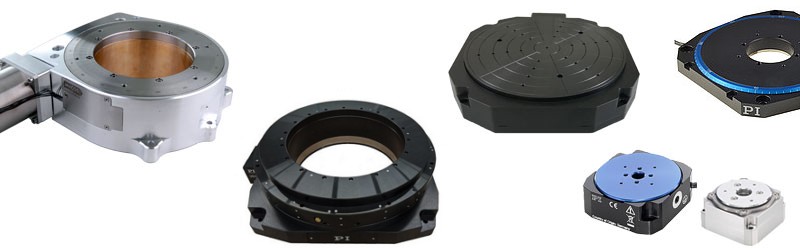
Motorized rotation stages use motion controllers, feedback and stepper, servo, piezo or torque motors to provide controlled angular positioning. Direct-drive rotary tables offer high speed, smooth motion, and no worm-gear transmission. Rotary air bearings provide the lowest eccentricity, wobble and friction, making them useful for optics, metrology and crystallography. Piezo-motor-driven rotary stages are compact, self-locking and stable at rest, while worm-gear rotary tables remain practical for high-load and vacuum-compatible positioning.
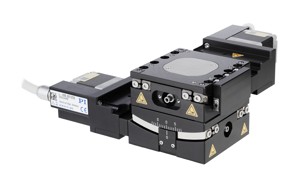
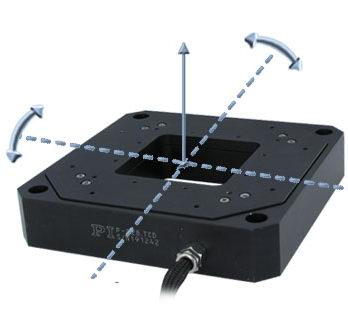
L-866 Compact, Stackable Goniometer with Common Center of Rotation
Stackable design
12° / 17° rotation range
0.8 / 1.1 µrad sensor resolution
10°/sec max. velocity
3.5 kg load
A/B quad encoder
This compact closed-loop goniometer family allows stacking while maintaining a common center of rotation, ideal for optics and photonics alignment automation.
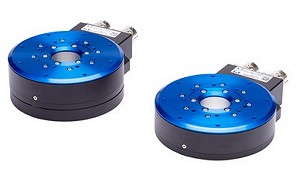
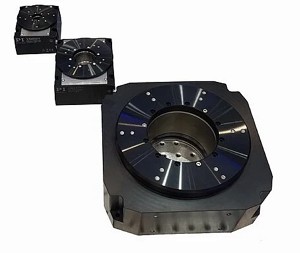
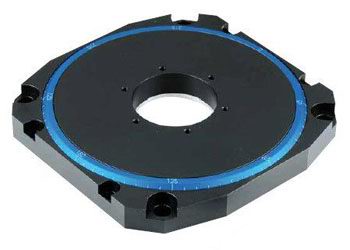
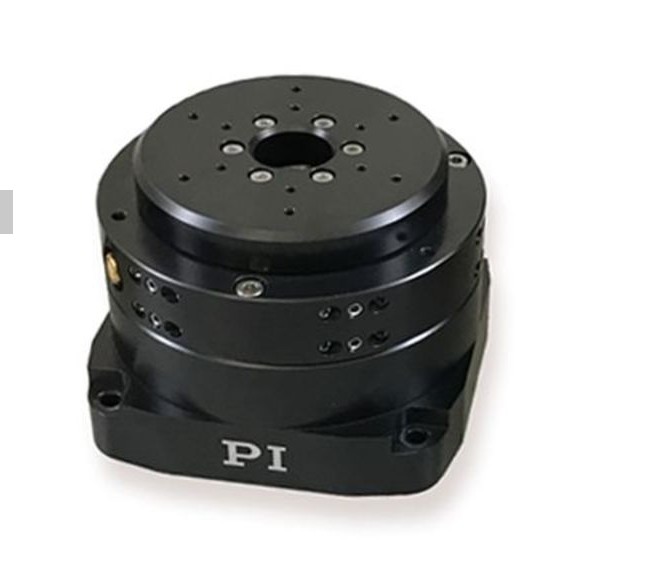
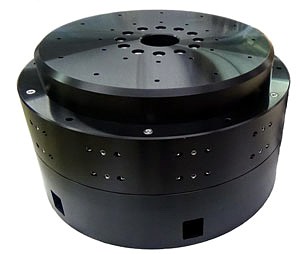
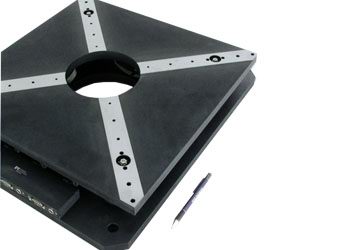
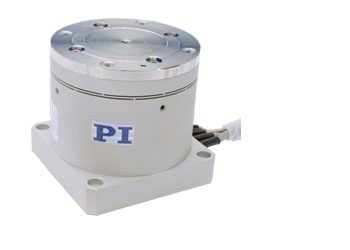
The V-62x direct-drive ball-bearing rotation stages are designed for industrial precision, high stiffness, long lifetime, high repeatability, and excellent geometric performance.
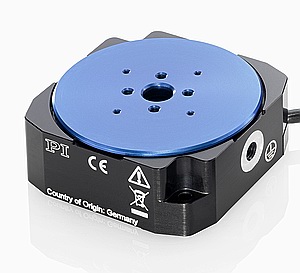
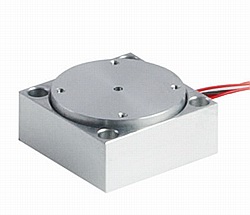
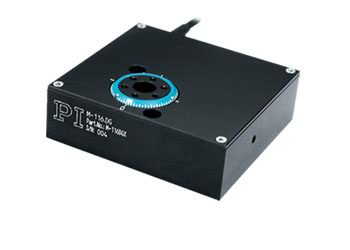
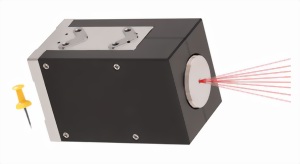
This miniature closed-loop rotary positioner is driven by an ultrasonic direct-drive motor and provides high rotational velocity with direct position feedback.
U-624 / U-622 Sub-Miniature Rotation Stage with Fast Ultrasonic Motor
As small as Ø20 x 10 mm
Speed to 2 revolutions/sec
35 µrad encoder resolution
Ultrasonic ceramic motor
Vacuum version available
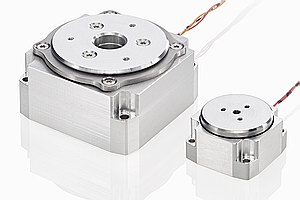
These sub-miniature rotation stages are available in standard and vacuum versions. A ring-shaped ultrasonic ceramic motor provides high speed and an encoder provides position feedback.
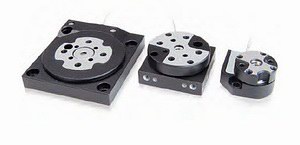
Ultra-Low-Profile Mini Rotation Stages with Stick-Slip Piezo Motors
14, 22 and 32 mm diameters
Vacuum option
Low profile from 7 mm
Continuous rotation
Piezo stick-slip motor
45°/sec
Very high resolution
Q-motion miniature rotation stages use inertia-type piezo motors for backlash-free direct drive, micro-radian resolution, and self-locking long-term position stability.
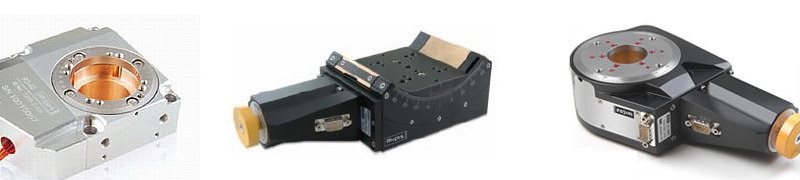
Additional Precision Rotation Stages and Goniometer Cradles
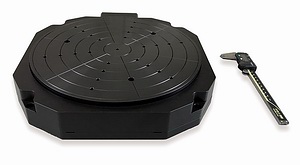
High-speed air bearing precision rotation stages
High-vacuum and UHV-compatible rotation stages
Ultra-high-precision closed-loop rotation stages with torque motors
Compact rotation stages
Goniometer cradles
Tip/tilt stages
The PI miCos line includes miniature rotary stages, goniometers, belt drives, worm-gear drives, torque motors, direct metrology and air bearings. Many versions are available for high vacuum and UHV.
Goniometer Cradles: Precision Rotation with a Fixed Pivot Point
Several models
10° to 90° rotation range
2.7 to 50 µrad minimum incremental motion
Velocity to 15°/sec
Loads to 20 kg
Direct encoder option
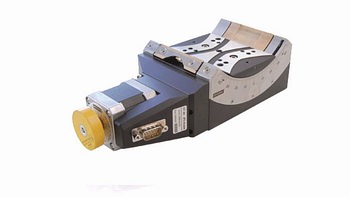
Goniometric cradles rotate samples and objects to a precise angular position around a fixed pivot point. Precision servo and stepper motors with high-resolution encoders are available.
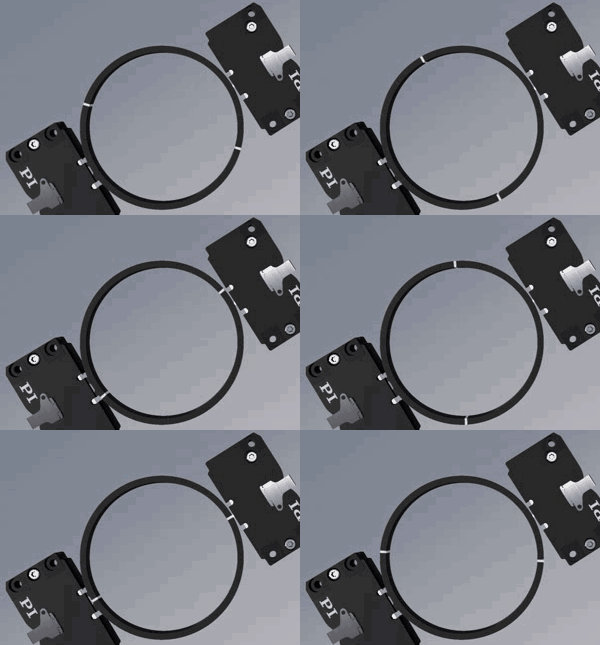
Two ultrasonic piezo motors driving a circular ceramic runner in an M-660 rotation stage.
Ultra-slow animation of the PILine ultrasonic piezo motor. The ceramic tip moves on a pseudo-elliptical trajectory; in reality, the motion is only a few nanometers at ultrasonic frequency.
Rotary Stage vs. Goniometer – What to Choose When
Rotary stages and goniometers both provide precision angular positioning, but they solve different alignment problems. A rotary stage turns a load around its own central axis and is the right choice when continuous rotation, indexing, or high-speed angular scanning is required. A goniometer rotates a load around an offset pivot point, making it better for optical alignment tasks where the center of rotation must coincide with a lens, mirror, fiber, detector, or sample.
Feature
Rotary Stage
Goniometer
Motion
Rotation around a central axis
Angular motion around an offset pivot point
Rotation Range
360° continuous or unlimited rotation
Typically limited angular travel, often ±5° to ±30°
Center of Rotation
Normally through the center of the stage
Virtual pivot point above or below the stage surface
A sample, wafer, optic, or workpiece must be rotated around its own center.
High rotational speed or smooth scanning motion is important.
A large clear aperture through the center of the stage is needed.
The required rotation axis naturally passes through the center of the object.
Choose a Goniometer When:
The pivot point must coincide with the center of a lens, mirror, fiber, detector, or sample.
Small, highly precise angular corrections are required.
Two angular axes need to share a common center of rotation.
The application involves optics, photonics, crystallography, probe alignment, or semiconductor instrumentation.
Angular positioning accuracy is more important than unlimited rotation range.
When a Hexapod Is the Better Choice
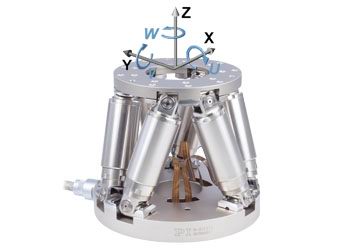
When the application requires both angular and linear alignment, a parallel-kinematic hexapod can often replace multiple rotary stages, goniometers, and linear stages. A hexapod provides six degrees of freedom *=(X, Y, Z, ΘX, ΘY, and ΘZ) with a programmable virtual pivot point that can be placed anywhere in space. This is especially useful for photonics alignment, semiconductor packaging, aerospace testing, optical assembly, and precision automation.
What Rotation Stages and Rotary Positioners does PI Provide?
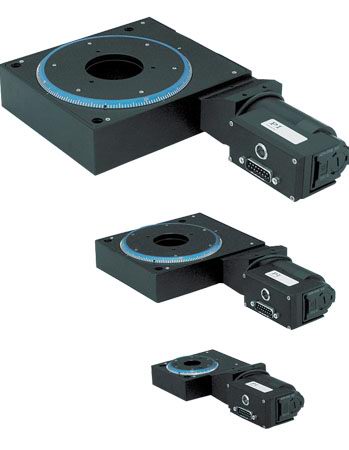
PI provides a wide variety of precision rotation stages for high-accuracy and standard precision positioning applications.
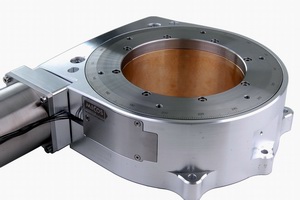
Different stage drive concepts, from ironless piezo-motors, air-bearings / torque motors to compact worm-gear rotary positioners with encoded and open-loop stepper-motors to the ultra-low profile, self-locking piezo-motor rotation stages are available in standard and custom designs. Air bearing stages provide extremely accurate motion with minimum wobble and excentricity and are recommended for applcations such as X-ray crystallography.
Piezo-motor-driven stages are self locking at rest, a great advantage when it comes to long term stability and when applications require power to be shut down. The low inertia of the piezo-rotation stages also enables very fast step and settle with minimum overshoot.
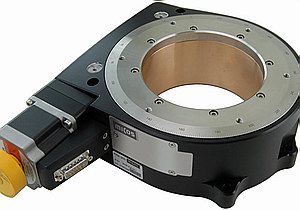
In addition to classical worm gear rotation stages for ambient and vacuum environments, goniometer cradles are available, tip/tilt positioners , piezo mirror rotators with fixed center of rotation and even multiaxis parallel positioners such as hexapods with fully programmable center of rotation for three rotary axes.
Rotatition stages can be added to linear or XYZ-stages for additional degrees of freedom.
Not all applications require rotation. If high precision linear motion only is needed, a variety of linear actuators are available.